


Which Scale Should You Use for Buying and Selling Gold? A Guide to Grams, Carats and Ounces
When choosing a scale for gold trading, look beyond the readability on the display to commercial suitability, the Min–Max range and the verification interval. Learn the difference between grams, carats and ounces and the basic steps to choosing the right scale.

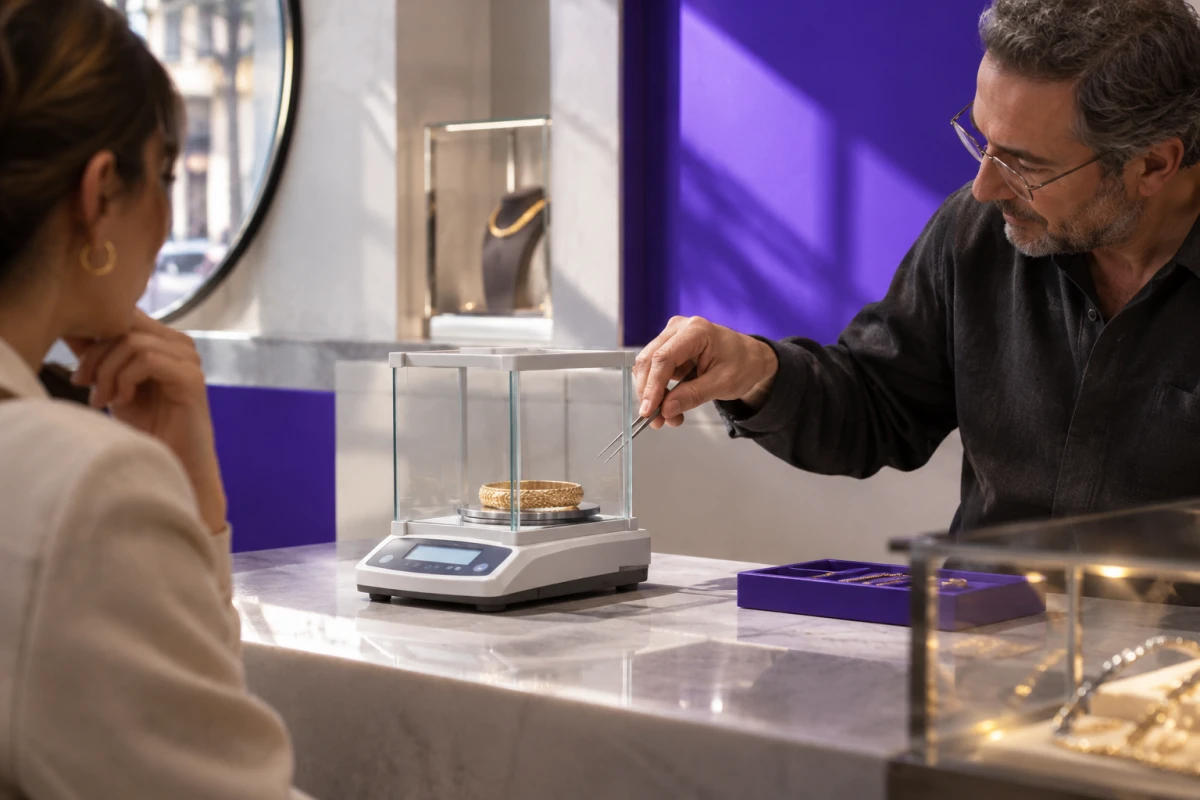
For buying and selling gold, use a scale that is suitable for determining mass in commercial transactions and complies with the relevant regulations. A laboratory or pocket scale that shows very small values on its display is not suitable for trade weighing for that reason alone. The device's conformity marks, capacity and inspection status must be assessed together.
When choosing a scale, you also need to tell grams, carats and ounces apart. The gram shows mass, and the metric carat used for gemstones is also a unit of mass. However, “18 carat gold” does not describe a weighing unit. It describes the purity of the gold.
What to look for in a scale for buying and selling gold
A non-automatic weighing instrument used for trade weighing must comply with the relevant regulations. Look for the CE mark and the supplementary metrology marking (M) on the device. These marks relate to conformity assessment. They do not replace the inspection and stamping obligations that apply during use.
When comparing scales, do not focus only on the smallest digit on the display. The Max, Min, d and e values on the data plate help you understand how the device performs across its weighing range.
- Max: The maximum capacity of the scale. It must cover the gold you weigh as well as the container, pan and tare.
- Min: The minimum capacity to consider for reliable weighing. Below this value the relative error can increase significantly.
- d: The display interval. Do not treat the size of the displayed digit alone as a sign of commercial suitability.
- e: The verification scale interval. It matters for classification and the assessment of permissible errors under OIML R 76.
OIML R 76 defines Class II as high accuracy and Class III as medium accuracy. For weighing small jewelry items or gemstones, a Class II model can be considered. But do not treat the class alone as enough. Also check the Min–Max range and the device's conformity status in Türkiye. We found no provision confirming that a single class or a single display interval is mandatory for all gold trading.
For more detailed selection criteria, see our jewelry scale buying guide, or compare products in the jewelry precision balances category.
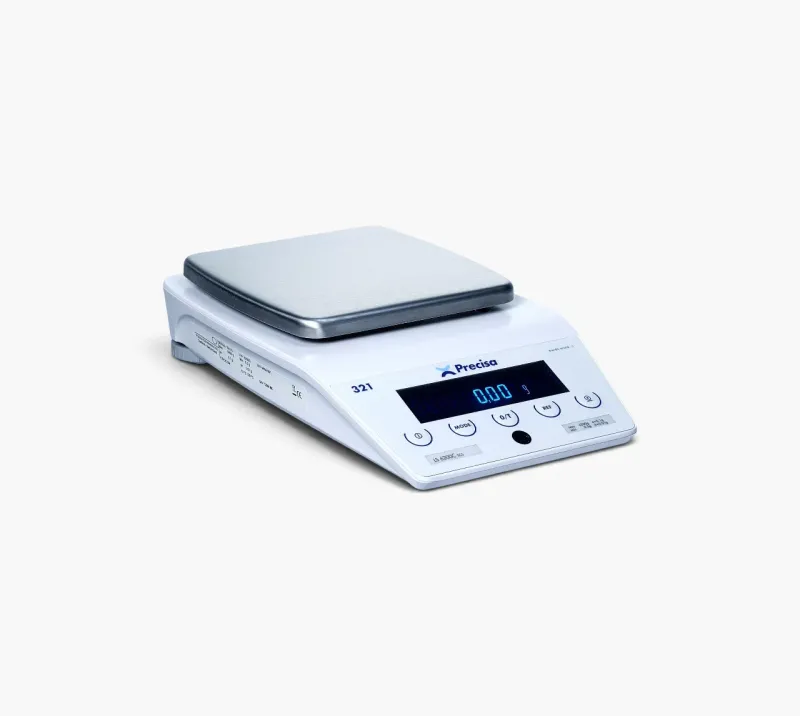
The difference between grams, carats and ounces
- Gram (g): A unit of mass. It expresses the mass of the gold. Check separately whether the unit shown by the device is permitted for commercial use.
- Metric carat (ct): A unit of mass used mainly for gemstones. 1 ct = 0.2 g. Do not confuse it with “18 carat gold”.
- Gold karat (K): Describes the purity of gold. 18K means that 18 of 24 parts, or 75% of the alloy by weight, is gold. A scale does not measure this.
- Ounce (oz): A unit of mass. The troy ounce used for precious metals is 31.1034768 g. The avoirdupois ounce is about 28.3495 g.
The ounce used in gold price quotes is the troy ounce. If your scale has an “oz” option, check which type of ounce it shows. Having g, ct or oz in the device menu does not automatically mean that the unit is permitted for commercial use in Türkiye. Manufacturer manuals also note that unit options may depend on national regulations.
A short checklist before you buy
- Ask about the device's conformity status and say that it will be used for commercial transactions.
- Check the CE and supplementary metrology marks. Do not treat them as a replacement for the inspection required during use.
- Make sure the total load, including gold, container and tare, does not exceed Max.
- Check that your smallest weighing amount does not fall below Min.
- Look at d and e together. Do not decide based on the number of digits on the display alone.
- Follow the inspection and stamping requirements for your type of use. In Türkiye the periodic inspection interval for non-automatic weighing instruments is two years, and responsibility for the inspection is shared between the relevant authorities depending on the device class and type of use.
To assess the model together with your use case, you can also read our article on whether every scale that shows 0.01 g is a jewelry scale. If you need to determine the purity of gold, do not confuse the weighing result with a purity analysis. A scale measures mass and cannot tell 14K from 18K on its own. Purity analysis needs a separate measuring method. When reviewing the products in the gold analysis balances category, verify the device's measuring function separately.
Frequently Asked Questions
Is a Class II scale always required for buying and selling gold?
We found no provision confirming that a Class II scale is required for all gold trading. Assess the class, Min and capacity values, the intended use and the device's conformity status in Türkiye together.
Is selecting ct or oz on the scale enough for trade weighing?
No. Having the unit in the menu does not by itself mean it is permitted for commercial use in Türkiye. Check the type of unit and the device's compliance with the relevant regulations.
Does a scale show the karat of gold?
No. A scale measures mass. The purity of gold is a separate property and is not the same measurement as weighing.
Conclusion
The right scale for buying and selling gold is not simply a device with a small display interval. Suitability for commercial use, the CE and M marks, the Min–Max range, the d and e values and the inspection requirements must be assessed together. Knowing the difference between the gram, the metric carat and the troy ounce also reduces the risk of trading in the wrong unit.
To choose a scale or have your current device assessed, browse Terazibul's jewelry scales or contact us about the model or technical service you need.



 Buy-Back Eligible Product
 Warranted Refurbished Scales
 Trade-In Eligible Product

Comments (0)