


How to Use a Torque Tester: A Cap Torque Test Guide
A cap torque test measures the rotational torque required to open a cap or applied in the closing direction. This guide covers how to prepare the device, secure the sample, perform the test, and record the result accurately.

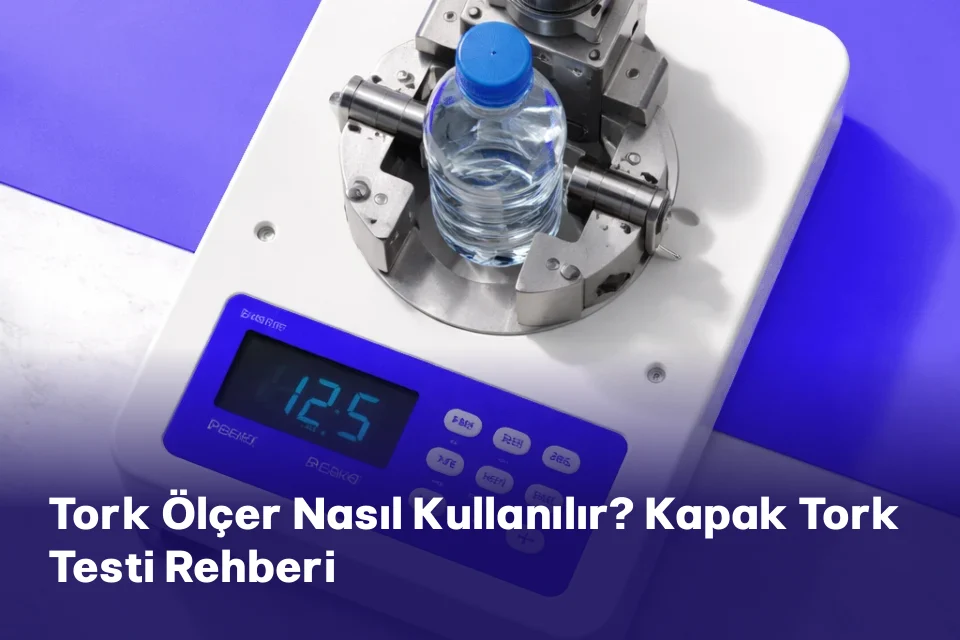
A torque tester measures the rotational torque required to open a cap or applied in the closing direction. To perform a cap torque test, check that the device’s capacity and selected unit are suitable for the cap being tested, secure the sample in the fixture so it cannot slip, and turn it in the direction specified in the test instructions. Then record the peak torque value.
This measurement differs from weighing on a scale, which measures mass. To compare results meaningfully, decide on the test direction, sample conditions, and recording method in advance. The steps below are a general guide. The procedures and limits in your device’s user manual take precedence.
Checks to Make Before a Cap Torque Test
Before starting the test, make sure the device’s measurement capacity is suitable for the cap being tested. Also check the selected measurement unit. For example, some cap torque testers use N·m. Follow the limits in the manual for your product.
If the capacity limit is exceeded, an overload warning may appear on the device. The form of this warning depends on the model. Rather than ignoring the warning on the display, follow the limits in the device manual.
- Test purpose: Decide whether you will measure the opening torque or the closing torque of the cap.
- Test direction: Clearly specify the opening or closing direction in the test instructions.
- Sample information: Identify the cap and packaging type so they can be recorded.
- Device check: Review the capacity, unit, and operating conditions in the device manual.
How to Use a Cap Torque Tester
- Position the sample: Place the package or cap in the device fixture. Secure it so it cannot rotate or slip during the test. If the sample is not secured in the fixture, it may slip during testing.
- Turn on the device and check zero: Wait for the device to complete its startup process. Check that the display shows zero when no torque is applied. If zeroing is required, follow the method in your device’s user manual.
- Select the test mode and direction: For an opening test, prepare to turn the cap in the opening direction. For a closing test, prepare to turn it in the closing direction.
- Apply torque in a controlled manner: Turn the cap in the selected direction and monitor the device reading. In an opening test, the peak value of torque applied counterclockwise is measured. In a closing test, the peak value of torque applied clockwise is measured. Follow the direction specified in your test instructions.
- Record the peak value: When the test is complete, note the peak torque value on the display. If your device supports it, you can save the result to its memory or transfer it to a computer or printer. Check the model manual to see whether these options are available.
Why Are Opening Torque and Closing Torque Recorded Separately?
An opening test measures the torque required to open the cap. A closing test measures the peak torque applied in the closing direction. These are different tests, and their results should not be treated as the same measurement. In your report or inspection form, specify whether the test was an opening or closing test and state the direction of rotation.
- Measurement value and unit: Write down the result shown on the display along with its unit.
- Test type and direction: Specify whether it was an opening or closing test and state the direction applied.
- Sample information: Record details that help identify the cap and packaging.
- Test conditions: For repeated measurements, keep sample preparation and the waiting time between tests consistent.
What to Consider When Comparing Results
For repeated tests, keep sample preparation and the waiting time between tests consistent. Comparing results directly may be misleading if the samples or application conditions differ. Do not assume that there is one acceptable torque value for every cap and package.
Measuring cap torque and calibrating a measuring device are separate from scale calibration. Assess calibration requirements based on the device model, frequency of use, measurement risk, and your quality procedures. Do not interpret a maintenance recommendation in the manual for a specific device as a fixed interval that applies to all torque testers.
The ASTM catalog lists method D2063/D2063M-24 for measuring torque retention of closures and practice D3474-23 for the calibration and use of torque meters in packaging applications. ASTM D3198 also covers applying closures at a specified torque and measuring the torque required to remove them from their containers. If you need to use these methods, verify the current document and relevant test conditions separately.
Frequently Asked Questions
Can a scale measure cap torque?
Cap torque is rotational torque, while a scale measures mass. A torque tester is therefore used for cap torque testing.
Is the same value recorded for opening and closing tests?
No. Opening and closing tests are performed in different directions. Record the peak value for each separately, along with the test type and direction.
Does the same torque limit apply to every cap?
A single acceptable range cannot be assumed to apply to all caps and packages.
Conclusion
For a cap torque test, check the device capacity and unit, secure the sample in the fixture, specify the opening or closing direction, and record the peak value with its unit. To review device options and models, visit the torque tester category. You can also read the selection guide for choosing force and torque testers.


 Buy-Back Eligible Product
 Warranted Refurbished Scales
 Trade-In Eligible Product

Comments (0)