


Test and Measurement Instruments: Force Gauge and Torque Meter Buying Guide
What is the difference between a force gauge and a torque meter? A practical QC guide covering cap opening torque, capacity selection and Axis FSA models.

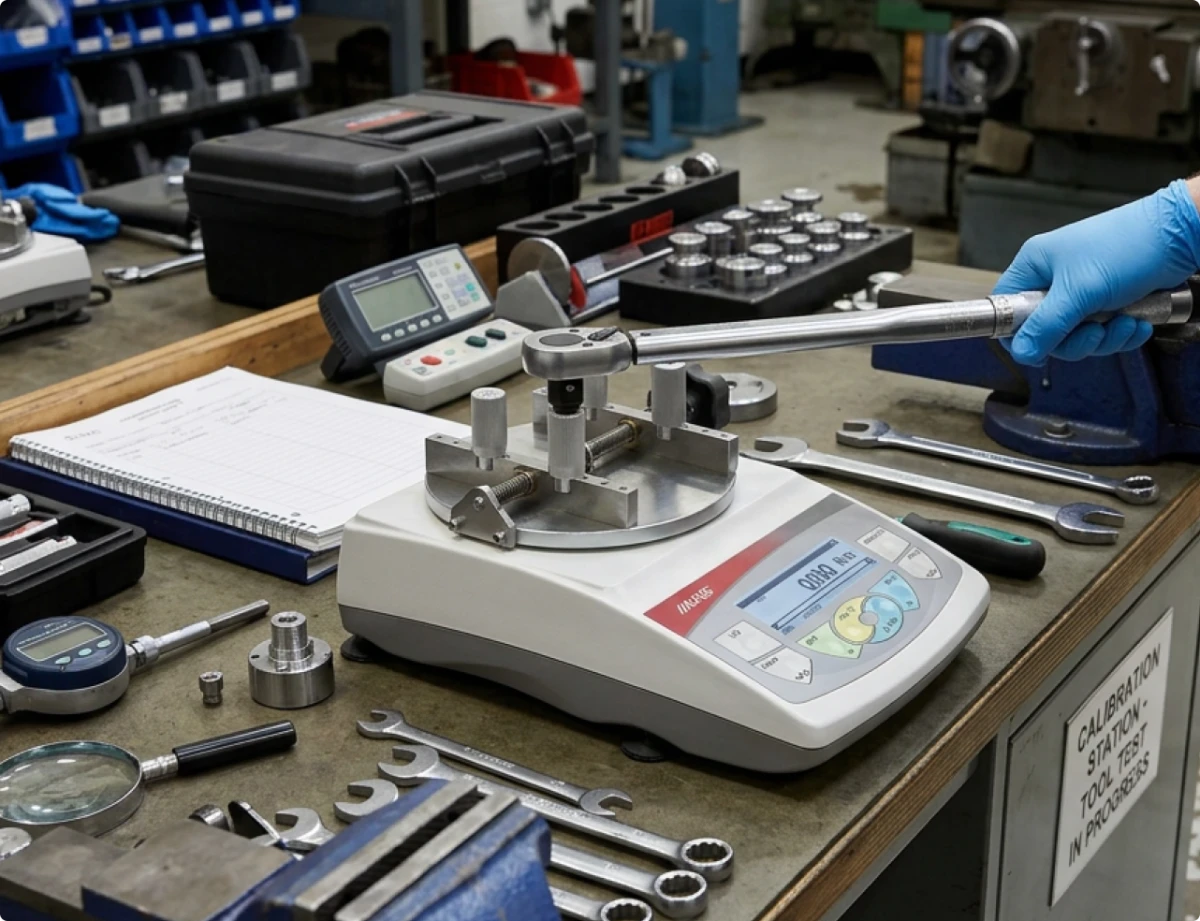
In quality control, force and torque measurement is just as critical as weighing. Screw tightening, cap opening, tension and compression tests and the risk of assembly errors are all kept under control with these measurements. In this guide we explain what test and measurement instruments are, what the difference between a force gauge and a torque meter is and how to choose the right device.
What is a test and measurement instrument?
Test and measurement instruments are equipment that numerically verify the mechanical performance of a product. A scale measures mass. A force gauge measures tension or compression in Newtons. A torque meter measures rotational moment in Nm.
Packaging, automotive supply industry, medical, electronics assembly and laboratory QC teams use these devices for both incoming inspection and process control. When results are traceable, complaints, scrap and assembly errors go down.
What is a force gauge?
A force gauge (also called a dynamometer) measures tensile, compressive or breaking force. Typical uses:
- Holding force of fasteners and clips
- Breaking tests of belts, cables and textiles
- Pushing force of doors, hinges and mechanisms
- Spot QC checks on the production line
When choosing the right model, capacity (N), resolution, peak value capture, data transfer and fixture compatibility matter. You can browse force gauge options in the force gauges category.
What is a torque meter?
A torque meter measures the rotational moment of a cap, screw or connection. Especially for bottle and jar packaging, cap opening and closing torque is critical for product safety and consumer experience. A cap that is too loose creates a leak risk. A cap that is too tight will not open or will damage the packaging.
With a torque meter, laboratory and production QC teams:
- Record cap opening torque (peak)
- Verify torque in the closing direction
- Track batch-by-batch deviations
- Run pass / fail checks against limit values
You can compare torque devices in the torque meters category.
Why is cap opening torque critical?
In food, beverage, cosmetic and pharmaceutical packaging, cap torque means both a proper seal and ease of use. For accurate measurement the device needs to:
- Have enough capacity
- Offer fine enough resolution
- Not miss short-lived peak values thanks to a high sampling rate
- Adapt to different bottle and jar diameters
The Axis FSA series are precision torque meters designed for exactly this need.
Measuring cap torque with the Axis FSA series
The Axis FSA models at Terazibul are used to measure opening and closing torque on jar and bottle caps. Their shared strengths are a high sampling rate, peak value recording and a wide sample diameter range.
- Axis FSA2: 2 Nm capacity, 0.001 Nm precision. For low-torque caps.
- Axis FSA5: 5 Nm capacity, 0.001 Nm precision. A common choice for the medium torque range.
- Axis FSA10: 10 Nm capacity, 0.01 Nm precision. For caps that need higher torque.
For the sampling rate and measuring range, see the technical specifications on the product page. Bidirectional measurement, graph display, RS232 / USB and microSD data logging speed up QC processes.
Criteria to consider when choosing the right device
1. Measurement type: force or torque?
If you need tension and compression, choose a force gauge. If you need rotation, tightening or cap opening, choose a torque meter. Mixing the two up for the same problem means the wrong capacity and the wrong fixture.
2. Capacity and resolution
Choose a capacity slightly above the maximum value you expect. Working constantly near the upper limit hurts accuracy and service life. For cap torque, steps such as 2 Nm, 5 Nm and 10 Nm are practical for everyday packaging QC.
3. Peak value and sampling rate
When a cap is opened, torque peaks briefly and then drops. A low sampling rate can miss the peak value. Models with high Hz values capture instantaneous changes better.
4. Sample fixtures and diameter range
A bottle, jar, screw or special part needs the right jaw or holder. Adjustable fixtures for different diameters reduce operator error.
5. Data logging and traceability
Quality systems require results to be stored and exported. Models with USB, RS232, microSD or software connectivity make reporting easier.
6. Calibration and service
A measuring device needs periodic verification. A supplier that offers service, calibration and spare parts reduces downtime in the long run.
Which sectors use them?
- Food and beverage packaging lines
- Cosmetics and personal care
- Pharmaceutical and medical packaging
- Automotive and supply industry assembly
- Electronics and appliance assembly QC
- University and industrial laboratories
Practical measurement tips
- Use the same fixture and the same procedure for every batch
- Clearly define the measurement direction (opening / closing)
- Put limit values in writing for each product
- Do not overload the device
- Set up a periodic calibration plan
Frequently Asked Questions
Are a force gauge and a torque meter the same thing?
No. A force gauge measures linear force (N). A torque meter measures rotational moment (Nm). For rotary applications such as cap opening, you need a torque meter.
What capacity is suitable for cap torque?
Look at the expected torque range of your product. For low-torque caps, the 2 Nm model is considered. For the medium range, 5 Nm. For higher torques, 10 Nm. At Terazibul, the Axis FSA2, FSA5 and FSA10 cover these steps.
Why is the peak value important?
The highest torque when opening a cap lasts only a short time. Devices without peak recording or with slow sampling can understate the real opening torque.
How are measurement results recorded?
In modern torque meters, device memory and transfer via USB, RS232 or microSD are common. Transferring to the QC file provides traceability.
How often should calibration be done?
It depends on how heavily it is used and on your quality procedure. More frequent verification is recommended on critical lines. If you suspect a deviation, check immediately.
Conclusion
Choosing the right test and measurement instrument starts with being clear about the measurement type. Decide whether you need force or torque. Then evaluate capacity, resolution, peak capture, fixture compatibility and data logging together.
For cap opening torque, look at the Axis FSA series, and for all products, see the test and measurement category. For model selection or calibration support, just write to the Terazibul team.


 Buy-Back Eligible Product
 Warranted Refurbished Scales
 Trade-In Eligible Product

Comments (0)