


How Much Is Your Old Scale Worth? 5 Factors That Determine Its Value
The second-hand value of an old scale cannot be determined by its age or brand alone. Its model, weighing performance, intended use, records, and repair options should all be considered together.

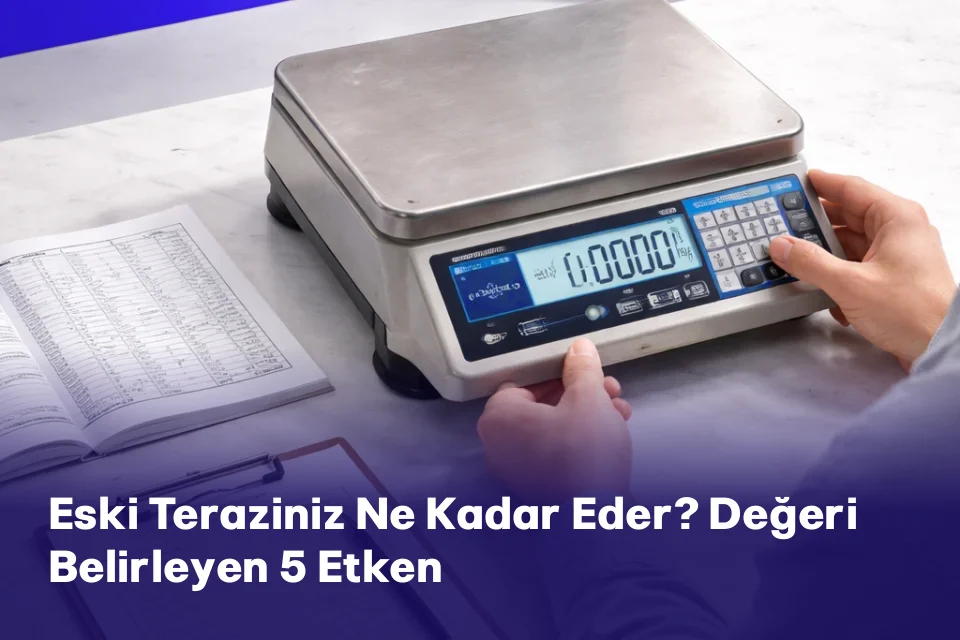
The evaluation of an old scale may take into account its brand and model, technical specifications, weighing performance, intended use, maintenance and service records, and any possible need for repairs.
The five points below can help you organize information that may be considered in a technical evaluation of the device.
1. Model and technical specifications
Identify the scale’s brand and model. Note its maximum capacity (Max), scale interval (d), verification scale interval (e), if applicable, minimum capacity (Min), and accuracy class.
The displayed readability value and the legal verification scale interval may not be the same.
2. Weighing performance and operating condition
Consider the following checks during the evaluation:
- Return to zero: Does the display return to zero when the load is removed?
- Repeatability: Are the results consistent when weighing the same load more than once?
- Platform check: Does the result change when the load is placed in different spots?
- Performance across the capacity range: How does the scale perform across its capacity range?
3. Intended use and legal inspection status
The scale’s intended use may be considered in a technical evaluation. Non-automatic weighing instruments used in commercial transactions may fall within the scope of regulations. The applicable requirements may vary depending on the type and capacity of the instrument.
If the device was used in commercial transactions, check its seal and inspection status. The Regulation on the Inspection of Weighing Instruments specifies a two-year period for periodic inspections. A calibration certificate provides information about the relationship between measurement results and reference values. It does not replace a legal inspection or seal on its own.
4. Calibration, maintenance, and service records
Calibration certificates, maintenance history, and service records provide evidence of the device’s weighing performance and the work carried out on it. Calibration determines the relationship between measurement results and reference values. Adjustment is intended to correct deviations. Weighing performance can also be checked separately.
Keep in mind that calibration and legal inspection are different procedures.
For more information about calibration, see the scale calibration guide.
5. Repairability and service and parts support
Whether the model can be identified and whether relevant service or spare parts support is available may be considered when technically evaluating the device and assessing any possible need for repairs.
Terazibul sells scales and provides technical service, calibration, and adjustment services in Üsküdar, Istanbul. It also buys, sells, and accepts trade-ins of second-hand scales. Do not assume in advance that a particular brand or model will be accepted. Request an evaluation by providing the device details.
How should you prepare the information before selling?
Before submitting the scale for evaluation or providing information to a buyer, prepare photos showing the device’s label, display, and platform. Include the brand and model, technical specifications, known faults, and a brief description of its intended use.
If you have calibration, maintenance, or service documents, mention them along with the device. If the scale is not working, clearly describe the observed condition.
You can use the scale sales page to submit your second-hand device to Terazibul for evaluation. If you are considering exchanging it for another device, learn about scale trade-ins. Browse the second-hand scales category to see second-hand and refurbished device options.
Frequently asked questions
What information can be considered when evaluating an old scale?
The brand and model, technical specifications, weighing performance, intended use, records, and any possible need for repairs may be considered in a technical evaluation.
Does a calibration certificate show that a scale is legally approved for use?
Not on its own. Calibration determines the relationship between measurement results and reference values. The legal inspection and seal status must be checked separately.
Can a non-working scale also be evaluated?
You can provide the brand and model details and describe the fault. Whether the model can be identified and any possible need for repairs may be considered in a technical evaluation.
Conclusion
When evaluating an old scale from a technical perspective, consider its brand and model, technical specifications, weighing performance, intended use, records, and any possible need for repairs.

 Buy-Back Eligible Product
 Warranted Refurbished Scales
 Trade-In Eligible Product

Comments (0)