


Moisture Analyzers
Explore moisture analyzers for determining moisture and dry matter content in laboratory and quality control applications. Review capacity, readability, heating technology and analysis features.

Moisture Analyzers
How to choose?
Readability
If you will measure low moisture levels, choose a model that reads 0.001 g.
Capacity
The models on our site range from 90 g to 210 g. Choose by your sample size.
Heating
Maximum temperature and heater type matter depending on the sample. Compare them in the technical specifications on the product page.
Which scale suits you?
- Small Samples90 g · 0.001 gList 3 Products
- Larger Samples110–210 g · 0.001–0.005 gList 4 Products
Frequently asked questions
How does a moisture analyzer work?
It first weighs the sample, then heats it to evaporate the moisture inside. It calculates the moisture content from the weight loss.
Which samples is it used for?
It is used for many samples such as grain, flour, food, feed, plastic granules and chemical powders.
How is it different from the oven method?
A moisture analyzer gives the result much faster. For results that match the oven method, the measurement settings must suit the sample.
Do I need separate sample pans?
Moisture analyzer pans are consumables. If you need them, write to us and we will find the right pan for your device.




Subcategory
- All
- Micro Balances
- Semi-Micro Balances
- Analytical Balances
- Semi-Analytical Balances
- Precision Balances
- Moisture Analyzers
- Pharmacy Balances
- Accessories
- Density Kits
Filters

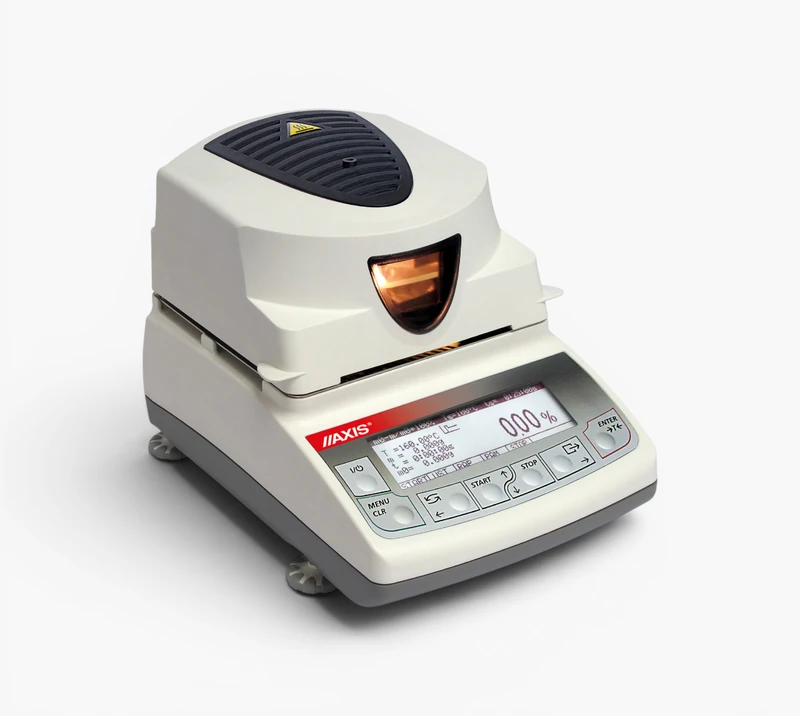
Axis BTS110D Moisture Analyzer, 110g, 0.005g
Axis ATS210 Moisture Analyzer, 210g, 0.001g
Axis ATS120 Moisture Analyzer, 120g, 0.001g
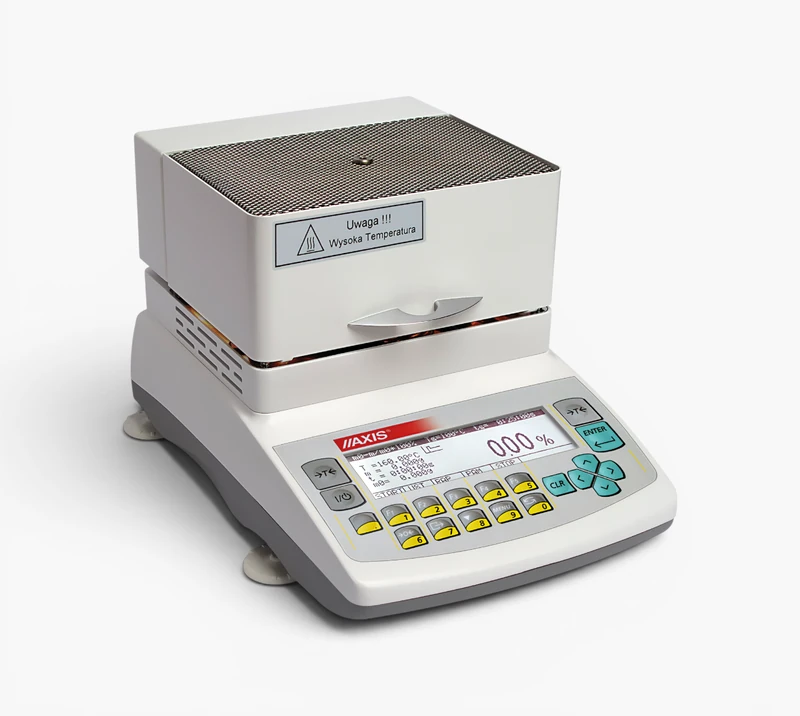
Axis AGS120 T250°C Moisture Analyzer, 120g, 0.001g

Moisture Analyzers
Moisture analyzers help determine moisture content by measuring the weight change of a sample before and after drying. They can be used for rapid moisture analysis in food, pharmaceutical, chemical, plastics, agriculture and quality-control work.
Choosing a Moisture Analyzer
Sample type, required temperature range, weighing resolution, heating technology and analysis programs all matter. Repeatable results need a standardised sample-preparation method and analysis parameters.
 Buy-Back Eligible Product
 Warranted Refurbished Scales
 Trade-In Eligible Product
