


“Unstable” Warning on a Scale Display: 7 Possible Causes
An “Unstable” warning on a scale does not point to a fault on its own. Learn the seven common causes of an unsettled reading, from vibration and air flow to sample behavior and pan contact, and the checks to do for each.


When an “Unstable” warning appears on a scale display, it means the reading has not settled yet. On its own, however, the message does not tell you which part is faulty or what exactly is causing the problem. Because the meaning of the warning and the right fix can differ between models, always use the device’s user manual as your reference.
An unstable reading is not always caused by a technical fault. Environmental and usage conditions such as vibration, air movement, the state of the sample or contact with the weighing pan can also affect the display. Checking the seven points below in order can help you narrow down the source of the problem.
7 possible causes of the “Unstable” warning
1. Vibration where the scale stands
If the bench or floor under the scale moves, the display may not settle. People walking past, running machines or other equipment nearby can also create vibration that affects the reading.
Try using the scale in a more suitable spot that is protected from vibration. If the problem appears only while a certain machine is running, watch how that machine moves the area around the scale.
2. Air flow reaching the pan
An open window, air conditioning or ventilation can put force on the pan and make the value change. On analytical balances, open draft shield doors also leave the reading exposed to outside air movement.
Close the draft shield doors and move the scale away from direct air flow. Then check whether the value settles after these changes.
3. A moving sample
If the sample being weighed is moving, the value on the display may not settle. The sample’s own movement changes the load the scale detects.
Check whether the sample moves on the pan. If the sample is unstable by nature, look at the usage guidance in the model’s manual before treating the warning as a device fault.
4. Contact with the pan or its surroundings
A foreign object stuck under the pan, or the pan touching the scale body or another nearby surface, can affect the measurement. Dirt or small objects around the pan are also easy to miss.
Make sure the pan sits freely and does not touch anything around it. If you see a foreign object, remove it following the cleaning and safety steps in the device manual.
5. Electrostatic charge on the sample or container
Static electricity that builds up on the sample or the weighing container can put extra force on the pan. This can cause an unstable reading or make the value drift in one direction.
If static charge is possible, observe the sample and the container. Under suitable working conditions an ionizer can help. Check the manual to see whether this is appropriate for your device and process.
6. Temperature difference between the sample, container and scale
Samples and containers that are warmer or colder than the room create air movement around them. This can make the value look unstable or drift over time.
Let the sample and container reach room temperature. The warm-up time a newly switched-on scale needs varies by model, so follow the information in the device manual.
7. The sample absorbing or losing moisture
The mass of a sample that absorbs moisture or evaporates can change during weighing. As a result, the reading may not stay fixed or may move steadily in one direction.
Consider whether the sample changes with humidity. Where suitable, covering the sample can help limit moisture exchange with its surroundings.

What to do after the checks
First review the scale’s position, air flow, the area around the pan and the state of the sample. Watching how the reading behaves after each single change makes it easier to see which condition matters.
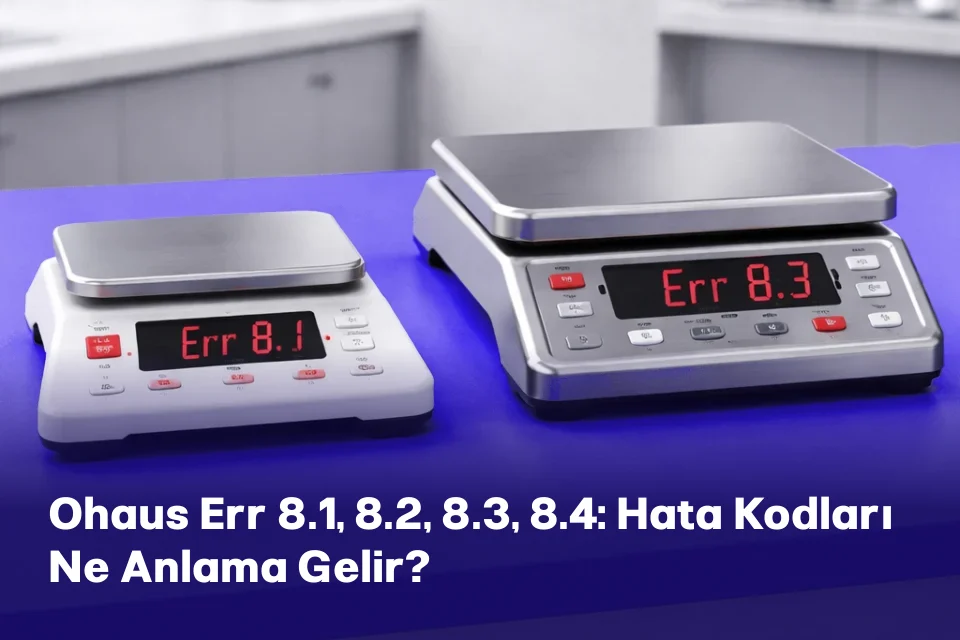
If the warning continues, compare the message with the user manual for your model. For brand-specific error codes you can use our scale error codes guide, and if a technical assessment is needed you can find details on the Terazibul technical service page. For more tips on sample placement, see our article on sample placement mistakes on analytical balances.
Frequently Asked Questions
Does “Unstable” mean the scale is broken?
No. The warning alone does not identify a fault. Usage conditions such as vibration or air flow can also cause an unstable reading. For the exact meaning and the steps to fix it, refer to your model’s manual.
What should I check first when the warning appears?
Check whether there is vibration or air flow where the scale stands, and whether anything touches the pan or a foreign object is stuck around it. Then look at the sample’s movement and the temperature difference between the sample and the room.
Should I keep weighing if the value keeps changing?
Do not treat an unstable reading as a final result. First remove the possible environmental and sample-related causes, then follow the steps in the manual. If the warning continues, ask for a technical service assessment.
Conclusion
The “Unstable” warning on a scale points to an unsettled reading that can have several causes, and on its own it does not diagnose a fault. Vibration, air flow, sample movement, contact with the pan, static electricity, temperature differences and moisture changes are the first things to check.
If the warning continues after these simple checks, review the model manual and get technical service support. To learn about Terazibul’s service process, you can use the service request form.

 Buy-Back Eligible Product
 Warranted Refurbished Scales
 Trade-In Eligible Product

Comments (0)