


Spotting Scale Faults Early: Acting Before Losses Grow
Signs that a scale is weighing wrong, early warnings, OL, CAL Err and other error codes, and an action plan before losses grow.

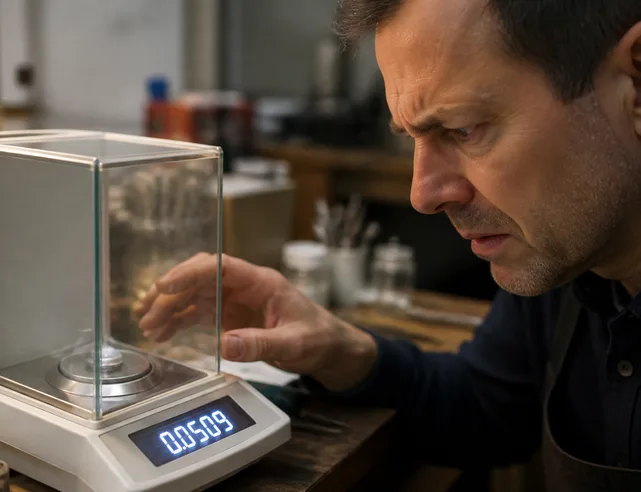
A scale fault rarely erupts all at once. First comes a small deviation, then unstable stabilization, then an error code that blocks the day's work. If it is noticed late, whether at the jewelry bench or in laboratory QC, losses grow. People search for "scale weighs wrong", "scale does not zero" and "scale gives calibration error". The common need behind these searches is the same: catching the problem early and acting before it grows.
The economic meaning of early detection is simple. A small systematic deviation makes a serious difference at the end of the month under heavy use. Customer weights do not match, return disputes arise and wrong accept-reject decisions are made in the laboratory. Isolating the problem early protects you not from an expensive repair but from days spent with wrong measurements.
Signs that should count as early warnings
If the same standard weight reads differently in the morning and in the afternoon, do not write it off as a quirk. If the zero point drifts on an empty pan, if the display does not settle after taring, or if stabilization takes twice as long as it used to, the instrument is no longer "good enough". If internal calibration is requested often but does not complete, that should also raise an alarm. If operators have started saying "this scale is acting strange today", keep a record. Shop-floor language sometimes gives an earlier warning than a technical report.
There is an important distinction. Environmental problems and instrument faults look alike. Air conditioning, vibration and a dirty weighing pan produce instability. That is why the first step is to stabilize the environment. If the deviation goes away once the environment is fixed, you avoid having the instrument taken apart unnecessarily. If the deviation remains after the environment is fixed, postponing becomes risky.
Practical order of action to keep losses from growing
Label the suspect instrument. If possible, move critical weighing at that bench temporarily to another verified instrument. Note the latest measurements and the standard weight results. Check the draft shield, the weighing pan and the base. Take three consecutive measurements with a reference weight. If it is still out of tolerance, set the instrument aside and start the service process. This order both speeds up diagnosis and prevents you from continuing to weigh wrongly in the hope that it might fix itself. For a backup plan at the jewelry bench, you can look among precision balances at models such as the Ohaus PJX2202. A scale used for trade weighing must carry the M mark and have a valid periodic inspection.
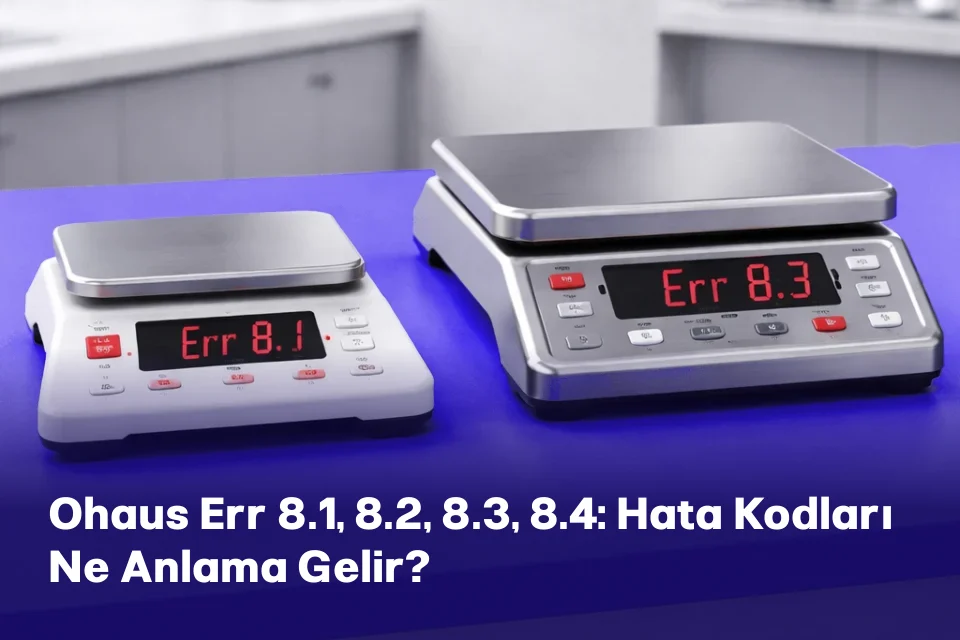
Common fault codes and first responses
OL / OVER: Overload or mechanical jamming. Remove the load. If it continues when empty, the weighing sensor or the mechanism needs to be checked.
UL / UNDER: The weighing pan is not in place or a part is missing. Seat the pan correctly. If it does not clear up, the mechanical connection should be checked.
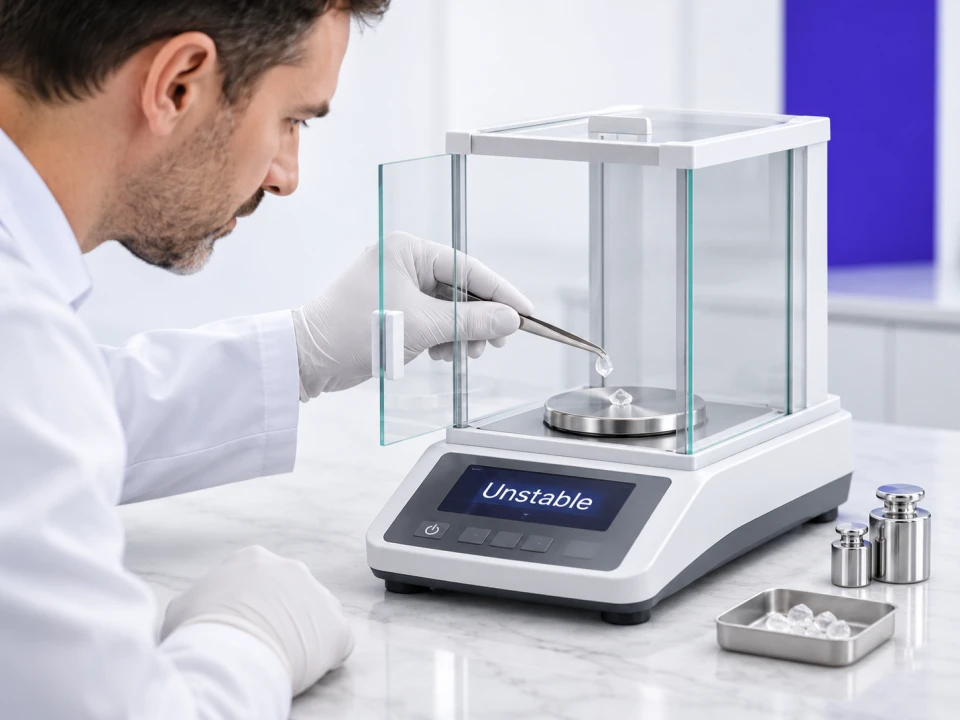
UNST: Unstable reading. Environment first. If there is no vibration or air current, the likelihood of a sensor or electronics fault increases.
CAL Err: Calibration cannot be completed. Check the standard weight and the environment, then repeat. Repeated errors are a sign to stop critical use.
Err / E1 / E2: These are brand-specific codes. If the same code comes back, photograph the display and record it together with the model information. Getting by with random resets can make the damage worse.
Lo-Bat: Low power. It causes drift, especially in portable use or use without an adapter. Switch to a stable power supply.
Frequently Asked Questions
What happens if we keep using a small deviation for another week?
At a busy bench, one week is enough for hundreds of wrong decisions. Isolating the instrument early is often cheaper than the repair cost.
Does every instability mean service?
No. Environment and weighing pan first. But if an out-of-tolerance deviation from the reference repeats, service should not be delayed.
Is a backup scale a must?
At a critical sales or QC point, a backup instrument greatly reduces the risk of downtime. Without one, it becomes hard to manage service time in a planned way.
Conclusion
Spotting a scale fault early is not a technical luxury but a business reflex. Write down the signs, verify with a reference and set the instrument aside when tolerance is exceeded. Stepping in after the losses have grown always costs more.
For a backup or new instrument, browse jewelry precision balances. If an out-of-tolerance deviation is confirmed, you can create a service request to start the technical service process.
 Buy-Back Eligible Product
 Warranted Refurbished Scales
 Trade-In Eligible Product

Comments (0)